Author: rassuncao@me.com

  • Renewable Energy Project Development in Africa

    Renewable Energy Project Development in Africa

    Africa stands at a pivotal crossroads in the global energy transition. Boasting some of the world’s richest solar, wind, hydro, and geothermal resources, the continent possesses an unparalleled capacity to redefine its economic future through clean power. However, despite housing roughly 60% of the world’s best solar resources, Africa currently accounts for a mere fraction of global renewable energy capacity. Transitioning from raw potential to operational infrastructure is not just an environmental target; it is an urgent socio-economic imperative that can drive industrialization, power local businesses, and extend electricity to millions currently living without it.

    Unlocking Africa’s Renewable Energy Potential

    The sheer scale of Africa’s natural energy assets is unmatched globally. The Sahara and Sahel regions receive some of the highest solar irradiance on Earth, while the East African Rift Valley holds vast, steady geothermal reservoirs capable of delivering reliable baseload power. Additionally, coastal stretches across North and Southern Africa offer world-class wind corridors, and the central river basins offer extensive, untapped hydroelectric capacity. By harnessing these localized resources, African nations can construct diversified, resilient energy portfolios that reflect their unique geographic advantages.

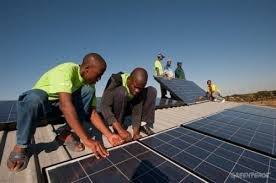
    Distributed renewable energy solutions are revolutionizing rural electrification, allowing the continent to leapfrog traditional power infrastructure much like mobile phones bypassed landline networks. Off-grid solar kits and localized mini-grids are rapidly bringing electricity to remote regions where expanding centralized national grids remains financially unfeasible. Innovative business models, such as Pay-As-You-Go (PAYGO) powered by mobile money, have democratized clean energy access, proving that off-grid renewables can be both socially transformative and commercially viable.

    At the macro level, ambitious utility-scale installations demonstrate that Africa can deliver world-class infrastructure projects. Landmark developments like Morocco’s Noor Ouarzazate Solar Complex, Egypt’s Benban Solar Park, and Kenya’s Lake Turkana Wind Power project showcase the viability of large-scale clean power on the continent. Supported by regional integration efforts like power pools and the African Single Electricity Market, these flagship developments are laying the groundwork for cross-border clean energy trading, allowing countries to export surplus green power to their neighbors.

    Main Challenges in African Clean Power Projects

    Despite significant momentum, renewable energy developers face substantial headwinds, chief among them being financial and investment barriers. The high cost of capital across many African markets—driven by macroeconomic instability, currency devaluation, and elevated perceived risk—makes initial project development disproportionately expensive compared to developed regions. Furthermore, a shortage of local currency financing forces developers to rely on foreign debt, exposing projects to severe exchange rate volatility that can compromise long-term economic viability.

    Grid infrastructure deficiencies and off-taker risks present another set of critical bottlenecks. Many national transmission and distribution grids are aging, inefficient, and ill-equipped to manage the variable generation associated with large-scale solar and wind power. Additionally, state-owned utilities, which typically act as the primary off-takers for Independent Power Producers (IPPs), often face financial distress. This instills doubt regarding their ability to honor long-term Power Purchase Agreements (PPAs), frequently requiring lengthy negotiations for government guarantees before projects can reach financial close.

    Finally, regulatory ambiguity and institutional capacity constraints continue to stall project execution across the continent. Fragmented policy frameworks, cumbersome land acquisition procedures, and unpredictable permitting processes increase development expenditures and deter long-term foreign direct investment. Overcoming these hurdles requires concerted efforts to standardize contract structures, streamline regulatory approval processes, and strengthen the institutional capacity of public sector agencies to effectively negotiate and execute modern power contracts.

    The path toward a clean-powered Africa is challenging, yet the potential benefits for the continent and the world are immense. Navigating the financial, technical, and regulatory hurdles demands coordinated action between African governments, private sector investors, and international development finance institutions. By scaling up blended finance mechanisms, modernizing power grids, and fostering predictable policy environments, Africa can turn its vast natural resource wealth into reliable electricity. In doing so, the continent will not only accelerate its own sustainable economic growth but also emerge as a key leader in the global green energy transition.

    RenewableEnergy #Portugal #NenupharAdvisors #nenupharfrontier #Solar #WindEnergy #BESS #EnergyTransition #GridConnection #Spain #uae #dubai #abudhabi #solarpv #wind #sps #wps #ess #energystoragesystems #greenhydrogen #hydrogen #sustainablefinance #climatechange #climatefinance #cleanenergy #sustainability #innovation #cleantech #renewables #energysector #greeneconomy #greenfinance #alternativeenergy #powergeneration #sustainableinvesting #batteries #energystorage #powermarkets #oilmarkets #oilandgas #linkedinnews #linkedinfinance #hydrogenenergy #hydrogeneconomy #energy #pv #solarenergy #climate #solarpower #power #developer #offshore #windoffshore #floatingwind #floatingoffshorewind #bioethanol #offshorewind #China #EV #evs #AI #persimmon #persimmoninvestments #Africa

  • Iberia storage M&A heats up as Africa grid link goes live

    Iberia storage M&A heats up as Africa grid link goes live

    Iberia’s storage M&A is heating up and the Africa-Europe grid corridor just got real.

    Two signals from the same week: capital keeps rotating through Iberian renewables, and Africa’s power link to Europe just moved from talk to formal agreement.

    What we’re tracking today:

    Capwatt, the Portuguese IPP, sold a 38 MW battery storage project in Catalonia to Switzerland’s Axpo — its first BESS exit in Spain. Small ticket, but it confirms buyers are paying up for shovel-ready Iberian storage, exactly the kind of SPV we underwrite.

    Portugal and Morocco agreed to build a new electricity interconnection, applying for EU co-financing under the Important Project of Common European Interest framework. The 2018 cost estimate of €800m is already outdated — a structural bet on an Africa-Europe power corridor.

    The Emerging Africa & Asia Infrastructure Fund committed $30m to Hassan Allam Utilities for Minya, a 1,000 MW solar-plus-660 MWh BESS project in Egypt co-developed with UAE’s Masdar. DFIs are still anchoring Africa’s largest solar-storage builds.

    At Persimmon Investments, that’s the map we invest against — Iberian storage exits and Gulf-backed African megaprojects, both real assets, both ring-fenced SPVs.

    Read the full brief on LinkedIn →

  • Gulf capital, gigawatt scale — now landing in Africa

    Gulf capital, gigawatt scale — now landing in Africa

    Gulf capital keeps flowing into gigawatt-scale power — and it’s landing in Africa as much as in the Gulf itself.

    Three developments from the past week underline where deal flow is concentrating: UAE balance sheets financing scale at home, and UAE-sponsored platforms pushing African solar from paper to steel.

    What we’re tracking today:

    Masdar closed financing on its USD 6.1bn Round-the-Clock project in Abu Dhabi — a 5.2 GW solar plant paired with a 19 GWh battery system delivering 1 GW of continuous clean power from 2027. USD 5.1bn came from a 13-bank consortium, USD 1bn from Masdar’s own equity. It’s the clearest signal yet that solar-plus-storage is being underwritten as baseload, not intermittent supply.

    Infinity Power — the Masdar/Infinity Energy JV — signed three EPC agreements at the Africa Energy Forum: roughly 774 MW of solar across two South African clusters and the 1.2 GW Nefer Minya project in Egypt, EBRD-financed and paired with storage. Pipeline is converting into construction contracts.

    South Africa’s NERSA approved generation licences for 890 MW of solar from Red Rocket and Engie under REIPPPP Bid Window 7.3 — confirmation the country’s procurement pipeline keeps clearing, project by project.

    At Persimmon Investments, that’s the map we invest against: GCC balance sheets underwriting scale, African pipelines converting to construction.

    Read the full brief on LinkedIn →

  • Capital scales up, DFIs follow it into Africa.

    Capital scales up, DFIs follow it into Africa.

    Capital keeps flowing to gigascale renewables — and DFIs are following it into Africa.
    This week’s deal flow across our core markets shows both ends of the pipeline moving: mega-financings in the Gulf, disciplined portfolio churn in Iberia, and blended finance still doing the heavy lifting in Africa.

    What we’re tracking today:

    Masdar closed $5.1bn in debt financing, part of a $6.1bn package, for a 5.2 GW solar-plus-19 GWh battery storage plant in Abu Dhabi — the world’s first gigascale round-the-clock renewable facility, backed by a 13-bank consortium. That’s the GCC end of our barbell: lower-risk, investment-grade infrastructure at a scale few developers can match.

    TotalEnergies exited its ~170 MW distributed solar portfolio across seven European countries, including Portugal and Spain, selling to Amarenco and AMPYR Distributed Energy. Majors are re-concentrating on utility-scale; that leaves more mid-market rooftop and C&I supply for platforms willing to operate it.

    The African Development Bank approved $66m for the first phase of Egypt’s 500 MW Dandara solar-plus-storage project, blending concessional and ordinary capital to unlock further DFI debt. Egypt keeps proving storage gets financed once a DFI anchors the capital stack.

    At Persimmon Investments, that’s the map we invest against: GCC scale, Iberia churn, and African growth anchored by DFI capital.

    Read the full brief on LinkedIn →

  • Abu Dhabi just closed the world’s biggest 24/7 solar+BESS deal.

    Abu Dhabi just closed the world’s biggest 24/7 solar+BESS deal.

    Abu Dhabi just closed the largest round-the-clock renewables financing on record.
    That’s the scale now defining serious renewables investing — patient capital, real assets, multi-billion-dollar conviction.

    What we’re tracking today:

    Masdar and EWEC reached financial close on a $6.1bn (€5.34bn) solar-and-storage complex in Abu Dhabi: 5.2 GW of solar paired with 19 GWh of battery storage, backed by $5.1bn in debt from 13 banks plus $1bn of Masdar equity. It’s built to deliver 1 GW of clean power, uninterrupted, 24/7 — the proof point that makes GCC renewables bankable at gigawatt scale.

    The African Development Bank approved $66m (€57.6m) for phase one of the Dandara project in southern Egypt: 500 MW of solar plus a 100 MWh BESS. DFI-anchored capital like this is exactly how African pipelines get de-risked into investable SPVs.

    Spain opened a public consultation, running through September 4, on letting battery storage compete directly with fossil generators in dispatch across its island systems — Canary Islands, Balearics, Ceuta and Melilla. Storage economics keep moving from subsidy to market design.

    At Persimmon Investments, that’s the map we invest against: GCC scale, African growth, European market design.

    Read the full brief on LinkedIn →

  • Round-the-clock solar just got a $6.1bn price tag.

    Round-the-clock solar just got a $6.1bn price tag.

    Round-the-clock solar just got a $6.1 billion price tag — and 15 banks signed up.
    Capital is rewarding dispatchable power and integrated grids, not just installed megawatts.

    What we’re tracking today:

    Masdar reached financial close on $6.1bn for a 5.2 GW solar plant paired with 19 GWh of battery storage in Abu Dhabi — $5.1bn in debt from 15 local and international banks, plus $1bn of Masdar equity, targeting 2027 start-up. Billed as the world’s first gigascale, round-the-clock solar-and-storage project, it’s a live benchmark for how big this financing can go.

    Egypt kept building on three fronts at once: the African Development Bank approved up to $66m for phase one of the 500 MW Dandara solar project with 100 MWh of BESS in Qena, while EETC signed new 220kV and 500kV transmission contracts to integrate 1,100 MW of Gulf of Suez wind. Generation, storage and grid moving together is the bankability model we watch for.

    Near Madrid, Ignis locked in grid access and a 94 MW solar PPA to power Apto’s new €2bn+ data-centre campus in Fuenlabrada — another sign data-centre demand is now financing new Iberian solar capacity directly.

    At Persimmon Investments, that’s the map we invest against: dispatchable power, integrated grids, and capital that follows demand.

    Read the full brief on LinkedIn →

  • 24/7 renewables just earned a $6.1bn nod.

    24/7 renewables just earned a $6.1bn nod.

    Round-the-clock renewables just banked a $6.1bn stamp of approval.

    A 13-bank consortium, a DFI, and a supermajor’s exit all landed in the same window — different structures, one signal: capital keeps flowing toward de-risked, scaled renewables. What we’re tracking today:

    Masdar reached financial close on its $6.1bn Abu Dhabi solar-plus-storage project — $5.1bn in debt from 13 international and local banks, backing 5.2 GW of solar paired with 19 GWh of battery storage. The world’s first gigascale round-the-clock renewable facility, and a live benchmark for how Gulf lenders price 24/7 clean power risk.

    The African Development Bank approved USD 66m (EUR 57.6m) for phase one of the Dandara project in southern Egypt — 500 MW of solar plus 100 MWh of storage. DFI capital keeps anchoring African solar-plus-storage bankability, the same blended-finance logic behind pipelines like ours.

    Shell agreed to sell its Sprng Energy platform — roughly 5 GWp across India — to Aditya Birla Renewables for USD 1.8bn, with GIP-managed funds co-financing. Another supermajor recycling capital out of an integrated renewables platform, straight into a strategic buyer’s hands.

    At Persimmon Investments, that’s the map we invest against: de-risked capital finding scale, wherever the structure allows it.

    Read the full brief on LinkedIn →

  • Capital keeps clearing for renewables.

    Capital keeps clearing for renewables.

    Capital keeps clearing for renewables — from Iberia to the Cape to the Nile.

    3 Three deals this week span refinancing, capacity auctions and DFI-backed project finance. Each confirms investor appetite for de-risked renewable assets across our core corridors.

    What we’re tracking today:

    Elawan Energy closed €760 million in refinancing for “Project Himalaya,” its 1.3 GW Spanish portfolio — 989 MW solar, 285 MW BESS, 74 MW wind across Castile and León, Castilla-La Mancha and Aragón. Roughly 1 GW already operational, a 300 MW greenfield tranche behind it, all wrapped into one non-recourse facility. Scaled, technology-blended portfolios still price well in Iberia.

    South Africa cleared 890 MW of solar under REIPPPP Bid Window 7.3, split across three Red Rocket projects and one ENGIE project in Mpumalanga and Free State. The flagship procurement programme keeps delivering contracted capacity investors can underwrite.

    Egypt’s Emerging Africa & Asia Infrastructure Fund committed a USD 30 million loan to Hassan Allam Utilities for the 1 GW solar / 660 MWh BESS Minya project, developed with Infinity Power — the Masdar-Infinity joint venture. DFI capital still anchoring UAE-backed African solar-plus-storage.

    At Persimmon Investments, that’s the map we invest against.

    Read the full brief on LinkedIn →

  • Round-the-clock solar just went gigascale — storage leads the way.

    Round-the-clock solar just went gigascale — storage leads the way.

    Round-the-clock solar just went gigascale. Three deals this week — in the UAE, Spain and Egypt — show where renewables capital is actually flowing, and it’s increasingly paired with storage.

    What we’re tracking today:

    BYD signed on to supply 11.275 GWh of battery storage for Masdar’s Abu Dhabi RTC project, pairing 5.2 GW of solar with 19 GWh of storage to deliver power around the clock. For investors, that’s the strongest signal yet that solar-plus-storage can underwrite baseload demand, not just cover peak hours.

    In Spain, Nadara reportedly won the bid for Acciona Energía’s 361 MW wind portfolio at roughly €430m, the latest step in Acciona’s asset-rotation programme. Operating wind keeps finding buyers even as merchant price risk climbs across the Iberian market.

    In Egypt, the Emerging Africa & Asia Infrastructure Fund committed USD 30m to Hassan Allam Utilities’ 1 GW Minya solar project with 660 MWh of paired battery storage, developed alongside Masdar’s Infinity Power joint venture — UAE capital, African deployment, storage-paired from day one.

    At Persimmon Investments, that’s the map we invest against: storage-paired generation, disciplined portfolio rotation, and UAE capital financing Africa’s build-out.

    Read the full brief on LinkedIn →

  • Grid capacity is becoming the new scarce asset.

    Grid capacity is becoming the new scarce asset.

    Grid capacity is quietly becoming the scarcest — and most valuable — asset in European renewables.

    This week’s headlines make the case: transmission upgrades unlock megawatts, blended finance unlocks gigawatts, and UAE capital keeps threading through Africa’s biggest solar-storage builds.

    What we’re tracking today:

    Spain and Portugal switched on a new 400kV interconnector between Beariz and Vila Nova de Famalicão, lifting cross-border capacity by 1,000 MW (to 4,200 MW Spain-to-Portugal, 3,500 MW the reverse) and unlocking an estimated 281 GWh/year of extra renewable integration. For Iberia-focused developers, that’s more headroom on the queue that matters most.

    In Egypt, the Emerging Africa & Asia Infrastructure Fund committed a further USD 30 million to Hassan Allam Utilities for the Minya project — 1 GW of solar plus 660 MWh of battery storage, co-developed with Infinity Power, the Masdar–Infinity joint venture. One of the largest single solar-plus-storage assets on the continent.

    Green Guarantee Company mobilised USD 70 million for African electrification: a USD 20 million guarantee backing Nigerian mini-grids under the DARES programme, plus USD 50 million supporting an LSE-listed green bond SPV.

    At Persimmon Investments, that’s the map we invest against.

    Read the full brief on LinkedIn →